
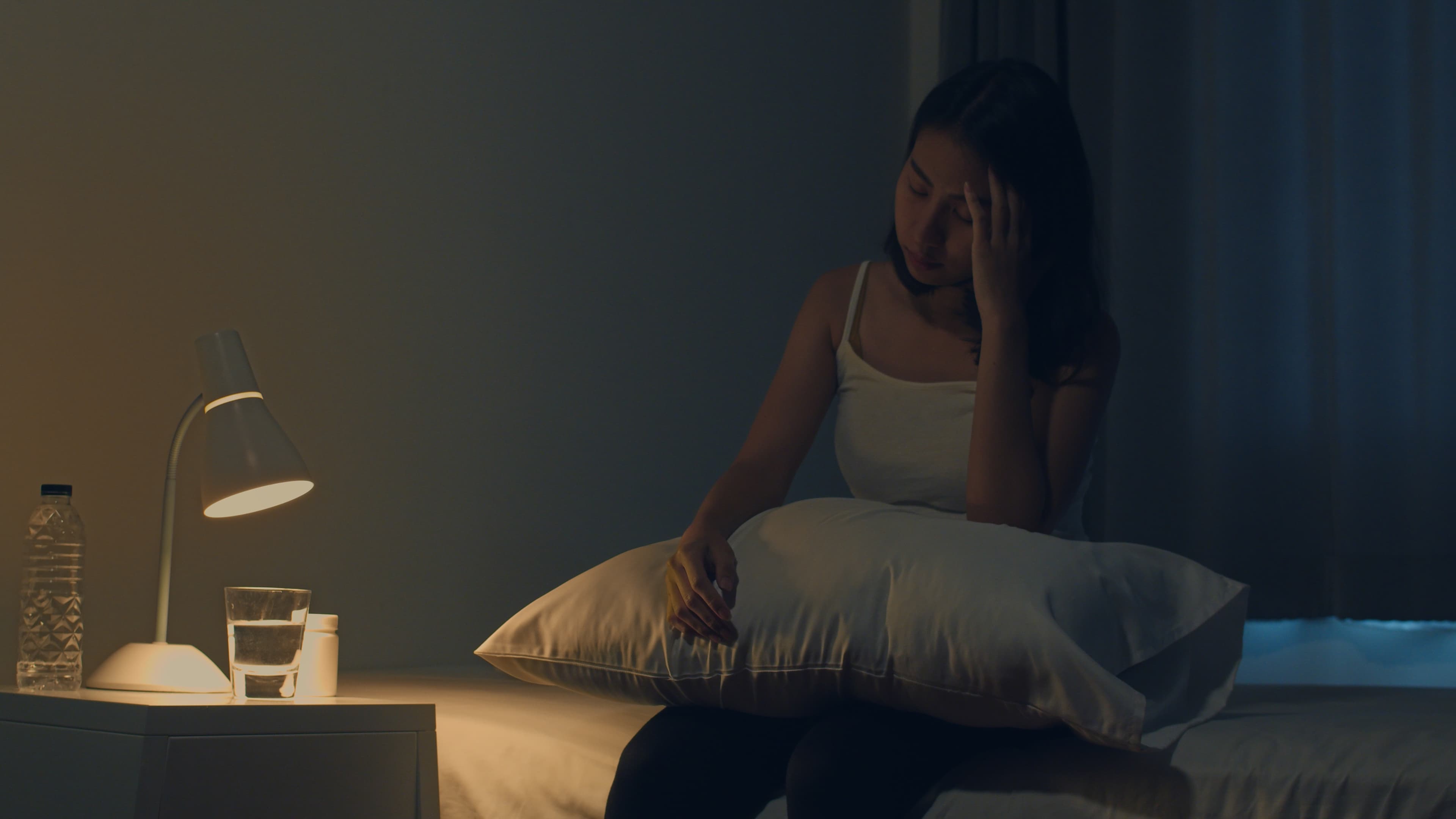
It's 3 AM. You're awake. The craving hits hard.
Your sponsor is asleep. Your support group doesn't meet until Thursday. The crisis hotline feels too extreme for "just a craving." You tell yourself you can wait until morning to reach out for help.
But morning is hours away. The craving isn't going anywhere. Your brain is screaming at you that using will solve everything. The isolation makes it worse.
This is when most relapses happen. Not during the day when support is available. In the middle of the night when you're alone with your thoughts and nobody's awake to help.
You need support right now. Not in six hours.
What Science Says About Nighttime Cravings
Nighttime cravings aren't the same as daytime cravings. They're neurologically different and significantly more dangerous.
Here's what happens in your brain at night: Your prefrontal cortex, which handles rational decision-making and impulse control, becomes less active when you're tired. Meanwhile, your amygdala, which processes emotions and stress, becomes more reactive. This combination creates what researchers call "reduced executive function under fatigue."
Basically, the part of your brain that says "this is a bad idea" gets weaker while the part that feels emotions intensely gets stronger.
A 2025 study from the Sleep and Addiction Research Institute tracked 1,800 people in recovery for one year. They found that cravings occurring between midnight and 6 AM were 3.4 times more likely to result in relapse compared to cravings during waking hours. The researchers identified several factors that made nighttime cravings so dangerous.
First, circadian rhythm disruption affects neurotransmitter balance. Your brain's dopamine, serotonin, and cortisol levels follow daily cycles. Between 2 AM and 5 AM, these chemicals are at their lowest natural levels in people with normal sleep patterns. If you're awake during these hours, you're operating with depleted neurochemical resources. Your brain is literally less equipped to resist cravings.
Second, sleep deprivation itself increases craving intensity. Research shows that even one night of poor sleep increases activity in the brain's reward centers by up to 30%. Your nucleus accumbens becomes hyperactive, making everything related to reward—including substances—seem more appealing. This is why people who are exhausted have stronger cravings than when they're well-rested.
Third, nighttime isolation amplifies negative thought patterns. During the day, external stimuli compete for your attention. At night, there's nothing to interrupt the cycle of craving thoughts. Your brain loops on the same ideas repeatedly, making the craving feel more intense with each repetition.
A 2026 longitudinal study examined the timing of relapses across different recovery stages. Early recovery (0-90 days) showed the highest concentration of nighttime relapses, with 68% of relapses occurring between 10 PM and 6 AM. Even people with 1-2 years of sobriety showed elevated nighttime relapse risk, though the percentage dropped to 41%.
The research also revealed something crucial: response time matters enormously. People who received support within 15 minutes of experiencing a nighttime craving had an 89% success rate in not using. Those who waited more than one hour before seeking support had only a 34% success rate.
The difference is dramatic because of how cravings escalate. A craving at 3 AM might feel manageable for the first 10 minutes. By 20 minutes, it's consuming most of your thoughts. By 45 minutes, you've already started rationalizing use. By 90 minutes, you're looking up dealers' numbers or planning where to get substances.
Immediate support interrupts this escalation before it becomes overwhelming.
The brain science explains why: when you receive support quickly, it reactivates your prefrontal cortex. Talking to someone, reading helpful content, using coping techniques—these activities engage your rational brain and reduce amygdala activation. But this only works if you get support before the craving has fully hijacked your thinking.
What Actually Helps During Nighttime Cravings
Traditional support systems weren't built for 3 AM cravings. But there are tools and strategies that work specifically for these high-risk moments.
Immediate AI support provides instant intervention. You can't call your sponsor at 3 AM every night, but you can access AI support that responds immediately. While AI can't replace human connection, it can provide coping strategies, remind you of your reasons for sobriety, and help you process the craving until morning. Tryphase's AI support is available 24/7, giving you instant access to guidance when human support isn't available. The response time matters more than you think—getting help within 5 minutes can stop the craving escalation before it becomes unmanageable.
Journaling at the moment externalizes the struggle. When you write down what you're feeling at 3 AM, you're doing two things: activating your prefrontal cortex through the act of writing, and creating distance between yourself and the craving. The craving stops being "I need to use" and becomes "I'm experiencing a craving." That shift in perspective reduces intensity. Tryphase's journaling feature is accessible anytime, letting you document the craving, your triggers, and what you're doing to cope—all of which reinforces your recovery identity in the moment.
Pre-written crisis plans provide structure. During a 3 AM craving, your brain can't think clearly enough to create a plan. But it can follow one you made earlier. Write your crisis plan during the day when you're thinking clearly: specific actions to take, reasons you want to stay sober, people you can text even late at night, coping techniques that work for you. When the craving hits, you execute the plan instead of making decisions with an impaired brain.
Asynchronous community support creates connection without real-time requirements. Reading posts from others who've survived nighttime cravings reminds you that you're not alone. Posting your own struggle, even knowing people won't respond until morning, still provides relief. The act of reaching out matters, whether someone responds immediately or hours later.
Distraction techniques that engage your brain work better at night. Simple breathing exercises don't work well during intense nighttime cravings because your brain needs more engagement. Try counting backwards from 100 by 7s. Play a complex game on your phone. Watch a show you've never seen before. Do a puzzle. These activities force your prefrontal cortex to activate, which reduces craving intensity.
Physical movement interrupts the craving loop. Even at 3 AM, you can walk around your home, do jumping jacks, or stretch. Movement changes your physiological state and disrupts the mental loop. It doesn't have to be intense—just enough to shift your body out of the frozen state that amplifies cravings.
Calling or texting a crisis line isn't too extreme. Many people avoid crisis lines because they think "it's just a craving, not a real emergency." But nighttime cravings ARE emergencies. If you're seriously considering using, that's exactly when you should reach out. Crisis lines exist for this exact situation.
Delaying tactics buy time for the craving to pass. Tell yourself you can use—but not for 15 minutes. When 15 minutes passes, add another 15 minutes. Most cravings peak and begin subsiding within 20-30 minutes if you don't feed them with continued craving thoughts. The delay tactic keeps you from impulsive action while your brain chemistry rebalances.
What doesn't work: Trying to "tough it out" alone. Going back to bed and hoping sleep will come. Scrolling social media mindlessly. Telling yourself you'll deal with it in the morning. Minimizing the danger of nighttime cravings. Feeling ashamed about needing help at 3 AM.
What to Do Right Now
Create your nighttime craving plan today, before you need it. Write it down physically or in your phone.
Your plan should include:
Three people you can text even at 3 AM (ask them in advance if this is okay)
Crisis line numbers saved in your phone
Specific activities you'll do (not vague ideas like "distract myself" but actual activities: "watch episode of The Office, do 50 jumping jacks, write in journal for 10 minutes")
Your strongest reasons for staying sober written in present tense: "I'm staying sober because..."
Reminder that cravings pass, with approximate timeline: "This will peak in 20 minutes and start decreasing"
Download a recovery app that offers 24/7 support features. Test the features now, during the day, so you know how to use them when you're in crisis. Find the AI support. Locate the journaling feature. Join the community. You don't want to be figuring out how the app works at 3 AM when your brain isn't functioning well.
Set up your sleep environment to reduce the chance of nighttime waking. But also acknowledge that you might wake up anyway, and that's not failure—it's just reality you need to prepare for.
Tell your support system that nighttime cravings are your vulnerable time. Don't hide this. The more people know, the more they can help you build strategies.
If you've experienced nighttime cravings before, analyze the pattern. What time do they usually hit? What triggers them—bad dreams, waking up to use the bathroom, insomnia? Understanding your pattern helps you prepare specifically.
Keep your phone charged and near you at night. This isn't about being attached to your device—it's about having your support tools accessible when you need them.
Support Can't Wait Until Morning
Nighttime cravings are more dangerous than daytime cravings. The science proves it. The relapse statistics confirm it.
You can't wait until morning to get support. Morning might be too late.
Traditional recovery support wasn't designed for 3 AM. But modern recovery tools are. AI support, digital communities, crisis text lines, and 24/7 hotlines exist specifically because nighttime vulnerability is real and common.
You're not weak for needing support at 3 AM. You're smart for recognizing when you're most vulnerable and preparing for it.
Build your nighttime support system now. Test it. Trust it. Use it.
The craving will pass. But only if you get through it without using. And you can't do that alone in the dark.
Need support that's there at 3 AM? Tryphase offers 24/7 AI support that responds instantly when cravings hit—no matter what time it is. Combined with anytime journaling and a community that understands nighttime struggles, you're never truly alone even at 3 AM. Download Tryphase and build your nighttime safety net before you need it. Because the worst time to figure out your crisis plan is during the actual crisis, and support that's always available saves lives.

.webp&w=1200&q=75)