
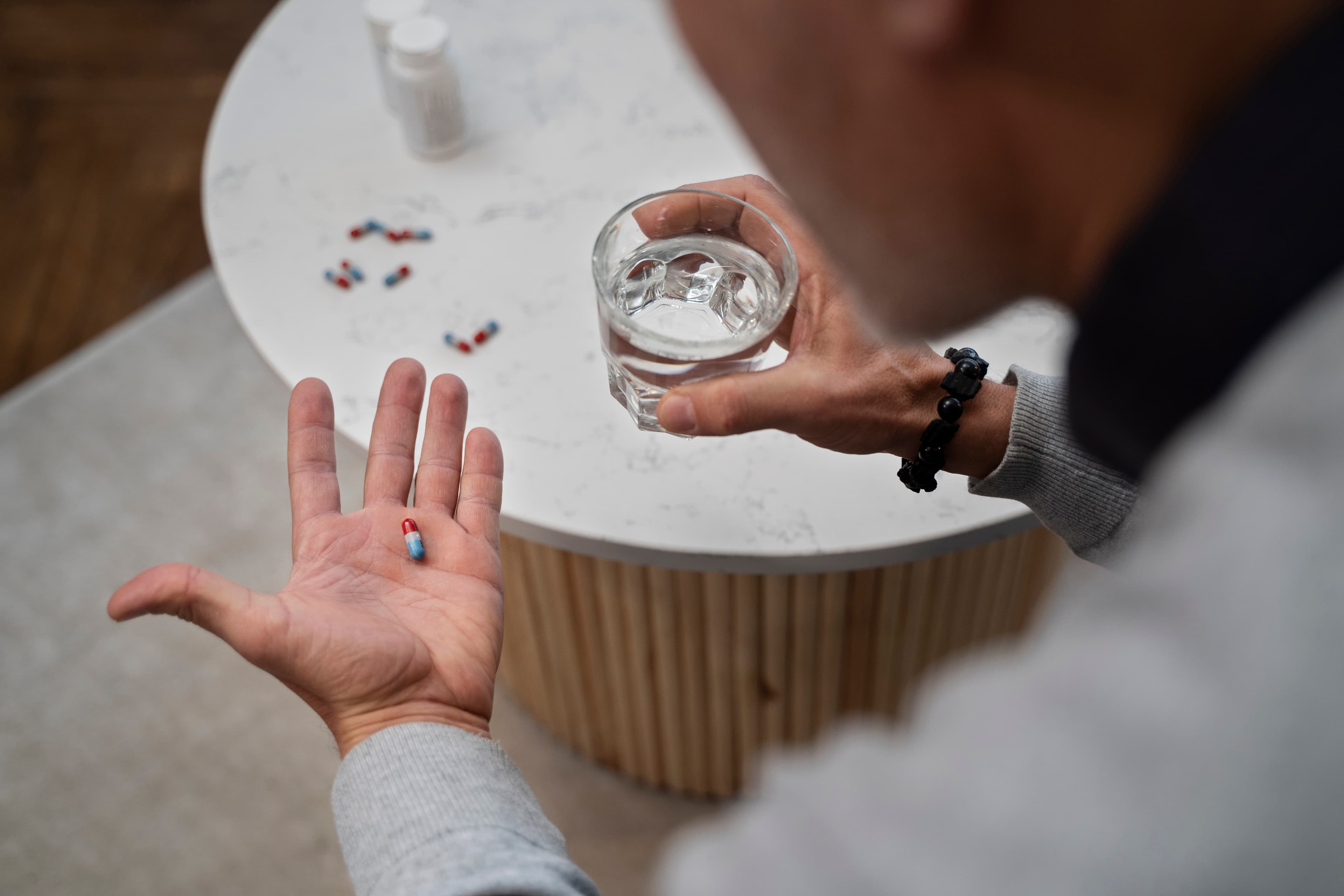
Fentanyl changed everything. This synthetic opioid is 50 to 100 times stronger than heroin. It's in almost everything. Pills. Powder. Street drugs you don't expect it in.
This means several things for people in recovery. First, the addiction is deeper. Fentanyl hijacks your brain more intensely than previous drugs. Second, the withdrawal is worse. Your brain becomes more dependent. Third, the relapse risk is higher. One slip doesn't feel like a mistake. It feels like a restart.
People who quit fentanyl face a different recovery path than previous generations. The brain damage is more severe. The cravings are more intense. The margin for error is smaller.
But recovery is still possible. You just need to understand what you're dealing with. You need different tools. And you need more support than ever.
This isn't about being weaker. It's about fighting a stronger enemy.
What Science Says About Fentanyl and the Brain
Why Fentanyl Is Different
Fentanyl works differently than heroin or other opioids. It binds to opioid receptors in your brain with much higher affinity. This means it sticks longer. It activates more intensely.
When you use fentanyl, your brain floods with dopamine. But it's a flood unlike anything your brain evolved to handle. The dopamine spike is so high and so sustained that your brain's reward system gets fundamentally broken.
Your brain adapts by downregulating opioid receptors. It's trying to protect itself. But this adaptation is extreme. You need more and more fentanyl just to feel normal. Without it, you're in intense withdrawal.
This creates a dependency that's harder to escape than with previous drugs.
The Brain Damage from Fentanyl
Fentanyl doesn't just change your dopamine system. It affects your entire brain.
Your prefrontal cortex—your decision-making brain—becomes significantly weaker. Your amygdala—your threat-detection and craving center—becomes hyperactive. Your reward system becomes so dysregulated that normal pleasures don't work anymore.
A 2025 study from the National Institute on Drug Abuse found that people addicted to fentanyl show more extensive brain damage across more regions than people addicted to previous opioids. The damage wasn't just in the reward center. It was in the regions involved in decision-making, emotional regulation, and stress response.
The study also found that recovery from fentanyl addiction takes longer. Not because people lack willpower. But because the brain damage is more extensive and takes longer to heal.
Median recovery time—the point where brain scans show normalization—was reported as 6 to 12 months for previous opioids. For fentanyl, it's extending into 12 to 18 months or longer.
Why Cravings Are Stronger
Fentanyl cravings aren't just psychological. They're neurological. Your brain has been trained intensely to seek this drug.
Every time you used fentanyl, your brain created neural pathways connecting environmental cues to the drug. A certain street. A certain time of day. A certain emotion. All of these become triggers that activate your craving center.
Because fentanyl is so potent, these pathways are deeply etched. They're strong. They're not easily overwritten.
A 2026 neuroscience study found that people in recovery from fentanyl show more robust craving responses to environmental triggers than people recovering from other drugs. The same trigger that might produce a mild craving for someone recovering from heroin produces an intense craving for someone recovering from fentanyl.
This isn't weakness. This is neurology. Your brain was trained more intensely.
Why Relapse Is More Dangerous
In previous eras, relapse was often survivable. You used once. Your tolerance had dropped. You survived.
In the fentanyl era, one use can be fatal. Because you don't know the purity. Because you don't know what's mixed in. Because fentanyl is so potent that even tiny amounts can be lethal.
This creates a different psychological pressure in recovery. It's not just "I might go back to addiction." It's "One mistake could kill me."
This pressure can either motivate recovery or push people deeper into hopelessness. Either way, it changes the recovery equation.
A 2026 study on fentanyl-specific recovery outcomes found that people who understood the real danger of relapse—not as a metaphor, but as actual overdose risk—showed higher engagement with recovery tools and higher success rates than those who didn't understand this reality.
What Actually Helps: Recovery Tools for the Fentanyl Era
You Need More Structure Than Ever
In the fentanyl era, you can't rely on willpower alone. You can't rely on occasional support. You need structure.
Structure means knowing what you're doing every hour of the day. It means having people to check in with. It means having safety nets in place.
This isn't about restriction. It's about survival. Your brain is wired intensely for this drug. Structure prevents the automatic pathways from running.
Structure includes: daily routines, scheduled check-ins with support, planned activities, communities you're part of, accountability partners.
You Need 24/7 Support Access
Because cravings can hit anytime, you need support anytime.
In previous eras, calling your sponsor during business hours might be enough. In the fentanyl era, a 2 AM craving is just as real and just as dangerous.
Having access to support 24/7—whether it's a crisis line, an app with AI support, or a community that's always available—can mean the difference between surviving a craving and relapsing.
When a craving hits and you have nowhere to turn, the path to relapse becomes likely. When a craving hits and you can reach someone or something immediately, you can interrupt the automatic response.
You Need to Track Everything
Tracking serves multiple purposes in fentanyl recovery. It shows your patterns. It proves your progress. It creates accountability.
When you track your sobriety, you're not just noting how many days. You're tracking what triggered you. What helped. What your vulnerable times are.
Over time, tracking creates a map of your recovery. You see the patterns. You prepare for the vulnerable times. You know what works for you.
Tracking also provides dopamine through accomplishment. When you see your streak—7 days, 14 days, 30 days—your brain registers this as achievement. This small dopamine release helps your brain rewire toward recovery.
You Need Meaning Beyond Abstinence
In the fentanyl era, just not using isn't enough motivation. You need to know why you're staying sober.
Because the pull toward fentanyl is so strong, because the danger is so real, because the temptation will come back—you need something bigger than willpower keeping you sober.
This is where journaling helps. When you write about why you're in recovery, what matters to you, what you're building toward, you're engaging the meaning-making parts of your brain.
You're not just saying "I won't use." You're saying "This is why I'm staying sober. This is what I'm protecting. This is who I'm becoming."
This reframing changes the neurological equation. Your brain stops being organized around "Don't use." It becomes organized around "Build this life."
You Need Multiple Forms of Support
One support source isn't enough in fentanyl recovery. You need multiple:
Professional treatment (therapist, counselor, medical support)
Community (12-step, recovery groups, peer support)
Family or close relationships
Spiritual or meaning-based practice
Technology support (apps, 24/7 access, tracking)
Each provides something different. Professional treatment addresses the medical and psychological aspects. Community provides accountability and belonging. Family provides love and stakes. Spiritual practice provides purpose. Technology provides consistency and accessibility.
Together, they create a safety net with no gaps.
What You Can Do Today
Understand Your Real Risk
First, understand that fentanyl recovery is serious. This isn't shame or drama. It's reality.
One relapse could be fatal. This isn't meant to create hopelessness. It's meant to create clarity. If you understand the real stakes, you'll engage with recovery tools more seriously.
Create Your Support List
Write down every support resource you have access to. Your therapist's number. Your sponsor's number. A crisis line. An app with 24/7 support. A friend you can call anytime. A recovery group's meeting schedule.
Put this list somewhere accessible. On your phone. On your wall. Somewhere you can access it when you're in crisis.
The point: when a craving hits and you're vulnerable, you don't have to figure out who to call. You have it written down.
Start Tracking Today
Begin tracking your sobriety today. Use an app. Use a calendar. Use a journal. Doesn't matter.
Track the date. Track how you felt. Track what you did instead of using. Track what helped.
Over time, this data becomes your recovery map. You'll see your patterns. You'll know when you're most vulnerable. You'll see what works.
Identify Your Why
Sit down today and write: "Why am I staying sober?"
Not "I should." Not "I have to." But "Why do I want to?"
Is it for someone you love? For yourself? For your future? For your health? For your dreams?
Write it down. Be honest. This is your anchor. When cravings hit, when recovery feels impossible, this is what you come back to.
Recovery in the Fentanyl Era Is Possible
Fentanyl made addiction harder. It made recovery more difficult. It changed the stakes.
But recovery is still possible. Thousands of people are recovering from fentanyl addiction right now. They're rebuilding their lives. They're reclaiming themselves.
The difference is that they're not trying to do it alone. They're using structure. They're accessing support 24/7. They're tracking their progress. They're staying connected to their why.
Your recovery won't look like recovery from previous eras. It will require more tools. More support. More structure. More intention.
But it's possible. You can do this. The brain that fentanyl broke can heal. It takes time. It takes support. It takes commitment.
But it's possible. Start today.

.webp&w=1200&q=75)